Mental Health Evaluations for Immigration Waivers: Why They Matter in 2026

What Are Mental Health Evaluations for Immigration?

Mental health evaluations for immigration are professional psychological assessments. Clinicians examine the emotional and psychological impact of immigration cases. Such evaluations provide clinical evidence for USCIS applications.

Also called:

  • Immigration psychological evaluations
  • Hardship waiver mental health assessments
  • Immigration mental health reports
  • Psychological evaluations for USCIS

Reports document how deportation or family separation affects mental health. They’re legally recognized as powerful evidence in immigration proceedings.

When You Need Mental Health Evaluations for Immigration

  • Extreme Hardship Waiver Cases Demonstrates spouse/children would suffer severe emotional distress. Documents depression, anxiety, and PTSD from separation.
  • Asylum Applications show persecution-related trauma and psychological harm. Validates fear of return.
  • VAWA Petitions Documents abuse trauma. Establishes the psychological impact.
  • U Visa & T Visa Cases Prove trauma from trafficking or crime victimization. Supports application strength.
  • Cancellation of Removal shows the family would face extreme hardship. Protects U.S. citizen relatives from emotional damage.
  • Family Separation Cases Address the child’s psychological impact. Demonstrates developmental harm.

Why Mental Health Evaluations for Immigration Matter

Proof Beyond Documents

USCIS looks beyond paperwork. Clinical expert testimony strengthens cases. Personal statements alone aren’t sufficient. Professional diagnoses carry significant weight.

Demonstrates Extreme Hardship

Legal requirement: Show “extreme hardship” to qualifying relatives. Mental health reports document measurable psychological harm. Depression, anxiety, and suicide risk clinical terms carry weight.

Expert Credibility

Licensed clinician credentials carry weight. USCIS respects licensed LPC, psychologist, and clinical social worker credentials. Unlicensed evaluators face immediate rejection.

Human Impact Evidence

Beyond financial loss, the emotional toll matters. USCIS considers emotional, medical, and educational consequences. Psychological evaluation highlights family impact.

What USCIS Looks for in Reports

Mental health evaluations for immigration must include:

Licensed Professional Credentials Detailed Family History Clinical Assessment Hardship Connection Professional Conclusions
Licensed Counselor (LPC) Applicant background and mental health Standardized testing results Specific explanation of the deportation impact Evidence-based recommendations
Psychologist (Ph.D./Psy.D.) Qualifying relative health/history Mental health diagnosis (if applicable) How would the family suffer psychologically Clear cause-and-effect relationship
Clinical Social Worker (LCSW) Current symptoms and diagnoses Severity level documentation Timeline of emotional deterioration Comparison to “normally expected” hardship
Licensed Marriage/Family Therapist Previous treatment records Medical/psychological evidence Financial vs. emotional consequences Supporting clinical literature

Mental Health Evaluations for Immigration: The Process

Step 1: Consult Your Immigration Attorney

Your attorney can confirm if a psychological evaluation strengthens your case. They’ll explain what the report needs to address. Family members who need evaluation are determined.

Step 2: Select Licensed Provider

Experience with immigration cases is crucial. Verify USCIS recognition of clinician credentials. Previous success rates matter too.

Step 3: Attend Initial Interview

Expect a comprehensive history interview (2-3 hours typical). Family structure, relationships, and finances get discussed. Your immigration timeline and fears matter.

Step 4: Complete Psychological Testing

Mental health gets measured through standardized assessments. Depression, anxiety, PTSD, and trauma get evaluated. Objective clinical findings are documented.

Step 5: Provider Writes Report

Findings are compiled into a formal report. Evidence-based language strengthens conclusions. USCIS-specific requirements get addressed throughout.

Step 6: Submit with Application

Your attorney includes a report in the waiver petition. Hardship argument gains strength. Clinical evidence supports legal claims.

What Makes Strong Mental Health Evaluations for Immigration

Specific, Not Vague

  • “Client shows clinical depression” (weak)
  • “Beck Depression Inventory score 32, indicating moderate depression from family separation fears” (strong)

Family-Focused Evidence Qualifying relatives must be addressed, not just applicant. U.S. citizen family suffering gets documented. Children’s school performance and health decline provide measurable evidence.

Medical Professional Quality Multiple assessment tools strengthen reports. Standardized tests ensure objectivity. Clinical literature citations add authority.

Clear Cause-and-Effect Deportation consequences must be explained precisely. Symptoms connect directly to immigration stress. Distinguishing from normal stress matters for USCIS approval.

Recent Documentation Current mental health status requires current assessment. Previous medical records provide context. Timeline from case start to present creates clear narrative.

Timeline: How Long Mental Health Evaluations for Immigration Take

Phase Duration Details
Scheduling 1-2 weeks Find a provider, book an appointment
Initial Interview 2-4 hours One comprehensive session
Psychological Testing 1-3 hours Standardized assessments
Report Writing 2-4 weeks Clinician compiles findings
Revision & Delivery 1-2 weeks Final report to the attorney
Total Time 6-10 weeks Complete process

Cost of Mental Health Evaluations for Immigration

Typical Range: $1,200–$2,500

Factors affecting price:

  • Geographic location (Atlanta costs differ from rural areas)
  • Clinician experience level
  • Number of family members evaluated
  • Testing complexity
  • Rush fees (faster turnaround costs more)

Insurance rarely covers immigration evaluations. Budget as a case expense. Many evaluators offer payment plans.

Red Flags: What Makes Reports Weak

❌ Generic language, no specific diagnoses

❌ Unlicensed provider conducting evaluation

❌ No psychological testing, only an interview

❌ Focuses on the applicant only, ignores the family

❌ Vague statements without evidence

❌ No connection between depression and deportation

❌ Report under 5 pages (insufficient detail)

❌ No dated assessments or timelines

USCIS rejects weak reports immediately. Poor evaluation wastes time and money. Invest in quality assessment from the start.

Mental Health Evaluations for Immigration: Common Questions

Q: Do I need a mental health evaluation if the attorney didn’t mention it?

A: Ask your attorney specifically. Strong cases include evaluations. Don’t assume one isn’t needed.

Q: Can a family member be evaluated by a different provider?

A: Yes. Spouse/child can use a separate licensed clinician. Reports submitted together strengthen the case.

Q: Does a diagnosis hurt my immigration case?

A: Clinical diagnosis supports hardship claim. Untreated depression strengthens the extreme hardship argument.

Q: Can I use previous mental health records instead?

A: Helpful but insufficient alone. Need an immigration-focused evaluation addressing hardship.

Q: How long are reports valid for USCIS?

A: Generally 1-2 years current. Recent evaluations (within 6 months) carry more weight.

Q: What if I can’t afford an evaluation?

A: Some nonprofits offer reduced fees. Some providers work with limited budgets. Ask about payment plans.

Next Steps

Ready for Mental Health Evaluations for Immigration?

  1. Contact immigration attorney – Confirm evaluation needed
  2. Schedule evaluation – Book with a licensed provider experienced in immigration cases
  3. Prepare documentation – Gather medical records, family information
  4. Attend evaluation – Be honest and thorough in assessment
  5. Submit report – Attorney includes in waiver petition

Mental health evaluations for immigration aren’t optional for serious hardship cases. Professional psychological evidence distinguishes approved cases from denied ones.

Professional evaluations address what legal documents cannot: the human cost of separation.

About Evaluations & USCIS Standards

USCIS policy guidelines shape mental health evaluations for immigration. Extreme hardship determination requires credible evidence. Psychological reports provide exactly that evidence. Licensed clinicians document findings with standardized tools.

Immigration courts expect these evaluations in waiver cases. Experienced practitioners routinely request them. Quality matters significantly in approval vs. denial outcomes.

Get Your Mental Health Evaluation for Immigration Today

Immigration psychological evaluations available from licensed specialists. Comprehensive assessments address USCIS hardship standards. Your waiver petition gains strength through professional reports. The family’s future depends on strong evidence.

Contact an experienced provider now.

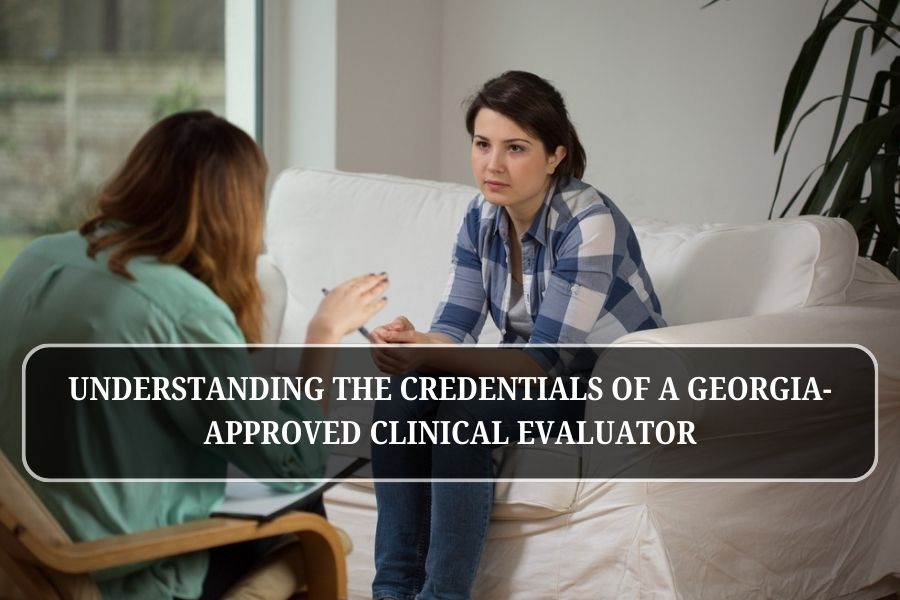
How to Choose a Georgia-Approved Clinical Evaluator: Understanding MAC, CAC, and CADC Credentials

CADC Credentials

When the court orders you to complete an alcohol and drug evaluation in Georgia, you are immediately thrust into a world of confusing acronyms and legal requirements. You might see terms like “DBHDD approved,” “clinical evaluator,” or a string of letters behind a counselor’s name and wonder what any of it means.

Here is the most important thing you need to know right now: In Georgia, a clinical evaluation is only legally valid if it is performed by a professional who is actively listed on the Department of Behavioral Health and Developmental Disabilities (DBHDD) Registry. If your evaluator does not hold specific, state-recognized credentials, your evaluation will be rejected by the court, the Department of Driver Services (DDS), and your probation officer.

Choosing the right professional isn’t just about ticking a box; it is about ensuring your paperwork is defensible in court and accepted without question. This guide will help you decode the credentials of a certified addiction counselor Georgia courts recognize so you can make an informed choice.

Why Credentials Matter in Georgia Law

The state of Georgia takes DUI and drug offenses seriously. To ensure public safety, the law requires that anyone assessing an offender must be highly trained in the field of addiction and substance abuse. This is not a task for a general life coach or a standard therapist without specific addiction training.

Under Georgia law, a “clinical evaluator” must have specific certifications to be approved by the DBHDD. These certifications ensure that the person sitting across from you—whether in an office or via a telehealth video call—has the education, experience, and ethical training to make a fair and accurate assessment of your situation.

If you submit an evaluation from a provider who lacks these credentials, you will likely face two consequences:

  1. Rejection: The court or DDS will refuse to accept the document.
  2. Additional Cost: You will have to pay for a second evaluation with a proper DBHDD-approved clinical evaluator.

Breaking Down the Letters: The Credential Guide

When you look for an evaluator, you will often see letters following their name. These aren’t just random titles; they represent years of study, thousands of hours of supervised clinical experience, and rigorous board exams.

Here is a breakdown of the three most common and respected credentials you should look for when seeking a substance abuse professional whose credentials GA courts accept.

MAC (Master Addiction Counselor)

The MAC credential is widely considered the gold standard in the field of addiction counseling. When you see “MAC” after an evaluator’s name, you are dealing with a highly educated professional.

  • Master’s Degree Required: Unlike some lower-tier certifications, a Master Addiction Counselor must hold a master’s degree or higher in a related health field (such as psychology, social work, or counseling).
  • Specialized Knowledge: A MAC has demonstrated advanced knowledge in the science of addiction, co-occurring disorders (where mental health issues overlap with substance use), and clinical treatment protocols.
  • Highest Tier: In the hierarchy of credentials, a master addiction counselor evaluation carries significant weight because it signifies the highest level of academic and clinical preparation.

CAC (Certified Addiction Counselor)

The Certified Addiction Counselor (CAC) designation is the backbone of the addiction treatment field in Georgia. It is divided into two levels: CAC I and CAC II.

  • Experience is key: A CAC isn’t someone who just passed a test. To earn this credential, a counselor must complete thousands of hours of supervised work experience. For a CAC II, this often involves 4,000 hours or more of direct clinical work.
  • The Difference Between Levels:
    • CAC I: An entry-level certification that requires a bachelor’s degree (or equivalent) and significant supervised experience.
    • CAC II: An advanced certification requiring a bachelor’s degree and even more extensive clinical supervision and experience. A CAC II can operate more independently and is recognized as a senior clinician.
  • Why It Matters: When you work with a CAC, you are working with someone who has seen thousands of cases. They have the practical experience to distinguish between a one-time mistake and a serious dependency issue.

CADC (Certified Alcohol and Drug Counselor)

The CADC credential is internationally recognized and adheres to strict standards set by the International Certification & Reciprocity Consortium (IC&RC).

  • Rigorous Testing: Earning a CADC requires passing a comprehensive written examination that covers everything from pharmacology (how drugs affect the brain) to ethical responsibilities.
  • Ethical Standards: CADCs are bound by a strict code of ethics. This protects you, the client, ensuring that your evaluation is conducted fairly, confidentially, and without bias.
  • Versatility: A CADC is trained to handle a wide variety of substance use issues, making them well-equipped to handle standard DUI evaluations as well as more complex drug possession cases.

How to Verify Your Evaluator’s License

Transparency is the enemy of fraud. Legitimate professionals want you to verify their credentials because they have worked hard to earn them.

You should never just take a website’s word for it. Before you pay a single dollar, you can—and should—verify that your potential evaluator is on the state’s approved list. This is the single best way to protect yourself.

The Verification Process:

  1. Visit the State Registry: Go to the Georgia DUI Intervention Program website (managed by DBHDD).
  2. Search for the Provider: You can search by the evaluator’s name or the program name.
  3. Check the Status: Ensure their status is listed as “Active.”

If a provider makes excuses about why they aren’t on the list or claims their “national certification” supersedes Georgia’s list, hang up the phone. In the context of a Georgia DUI or drug charge, only the DBHDD registry matters.

The Expert Advantage at AACS Atlanta

At AACS Atlanta, we don’t just meet the minimum standards; we aim for the highest level of clinical excellence. We understand that an evaluation is a legal document that can determine your future—whether you keep your license, avoid jail time, or clear your name.

That is why we exclusively employ evaluators with verified, top-tier credentials. When you book a session with us, you are likely meeting with a professional holding a MAC, CAC II, or comparable licensure (such as an LPC or LCSW with addiction expertise).

Why this benefits you:

  • Court Defensibility: If a prosecutor or judge questions the findings of your evaluation, having a MAC or CAC II sign the report provides an unshakeable layer of credibility.
  • Accuracy: High-level credentials mean our team knows how to interpret the standardized tests (like the SALCE or NEEDS) accurately. We ensure you aren’t unfairly categorized based on a misunderstanding of your history.
  • DDS Acceptance: The Georgia Department of Driver Services is strict. Our evaluators know exactly how to format reports to ensure they fly through the DDS processing system without rejection.

Warning: Avoiding “Certificate Mills”

The internet is full of websites promising “Instant Evaluations” or “15-Minute Assessments.” These are often what the industry calls “certificate mills.”

These sites typically:

  • Use automated quizzes instead of real clinical interviews.
  • Are operated by companies outside of Georgia with no knowledge of local laws.
  • Issue generic PDF certificates that have zero legal standing in a Georgia court.

If you submit one of these fake certificates, the judge will reject it, and you will be back at square one—minus the money you wasted. Genuine DBHDD-approved clinical evaluator assessments take time (usually 60-90 minutes) because they are thorough, medical-grade appointments.

Trust Our Certified Experts

Navigating the legal system is stressful enough without worrying if your evaluator is qualified. Don’t leave your driver’s license reinstatement or your court case to chance.

At AACS Atlanta, we pride ourselves on transparency, professionalism, and clinical expertise. We are here to help you satisfy your court requirements efficiently and correctly the first time.

Trust our certified experts for your court-mandated evaluation. Contact us to speak with a MAC or CAC-level professional today.

Arrested for DUI in Georgia? The 30-Day Rule and Your Mandatory Clinical Evaluation.

When most people hear the term “DUI,” they immediately think of alcohol. While that’s the most common reason for the charge, a significant number of drivers in Georgia are arrested for driving under the influence of drugs. This is where the law becomes much more complex, and the consequences can be even more severe. Many are shocked to learn that you can be charged with a DUI even if you are not “drunk” and have not consumed a single drop of alcohol.

This is because of Georgia’s “Less Safe” statute, O.C.G.A. § 40-6-391(a)(2). This law makes it illegal to drive while under the influence of any drug to the extent that it makes you a “less safe” driver. This includes illicit substances, but it also applies to legal prescription medications and even over-the-counter drugs. Unlike an alcohol DUI, where prosecutors often rely on a specific number (0.08 BAC), a drug DUI case is built on the officer’s observations and your behavior.

This distinction is critical. For those facing a DUI, less safe drugs GA charge, the standard legal process is different, and the role of a specialized drug DUI evaluation in Georgia becomes the most important tool in your defense. This guide will explain the unique challenges of drug-related DUIs and why a proactive, expert evaluation is essential.

Alcohol vs. Drug DUIs: The Legal Differences

The core difference between an alcohol DUI and a drug DUI in Georgia lies in how “impairment” is proven. With alcohol, the state has a clear, scientific threshold known as the “per se” limit. If your Blood Alcohol Concentration (BAC) is 0.08% or higher, you are legally considered impaired, regardless of how well you think you were driving.

Drug DUIs, however, fall under the “Less Safe” provision. There is no magic number.

Instead, the prosecutor must prove two things:

  1. That you had a drug in your system.
  2. The drug caused you to be a less safe driver.

This evidence often comes from the officer’s testimony about your driving, your physical appearance, your performance on field sobriety tests, and the results of a blood or urine test. Because this is more subjective, the case is often harder for the prosecution to prove and more defensible for the accused, especially with the right expert input.

Marijuana & THC Update 2026

One of the most common substances involved in drug DUIs is marijuana. It is crucial to understand that Georgia does not have a “legal limit” for THC (the psychoactive compound in cannabis) in the same way it does for alcohol. Any detectable amount of THC in your blood while driving can be used against you.

This creates a significant problem because THC can remain in a person’s system for days or even weeks after use, long after any impairing effects have worn off. A prosecutor only needs to show evidence of unsafe driving (like weaving or speeding) and a blood test positive for THC to build a case. This makes a marijuana DUI assessment a vital step. A skilled evaluator can help provide context for the court, distinguishing between recent use that may cause impairment and past use that is irrelevant to the driving incident.

The Critical Role of Your Clinical Evaluation

In any DUI case, a clinical evaluation is mandatory. However, for a drug-related DUI, its importance is magnified tenfold. This evaluation is not just a box to check; it is often the single most powerful piece of evidence for your defense.

When you are charged with a DUI of less safe drugs in GA, the state is claiming that a substance made you an unsafe driver. A specialized drug DUI evaluation in Georgia conducted by a state-approved professional directly addresses this claim. The evaluator performs a comprehensive assessment to analyze your substance use history, the context of your arrest, and any other contributing factors.

The final report can provide critical information for the court, such as:

  • Whether your use of a substance (prescription or otherwise) is consistent with a substance use disorder.
  • Whether the amount and timing of the substance use could realistically cause impairment.
  • If other factors, such as fatigue, stress, or a non-related medical condition, could better explain the officer’s observations of “unsafe” driving.

A favorable report from a credible evaluator can dismantle the prosecution’s central argument, providing your attorney with the leverage needed to negotiate a reduction of charges or even a dismissal. A proactive substance abuse assessment in Marietta or elsewhere in the metro area shows the court you are taking the charge seriously.

Prescription Medication is Not a “Get Out of Jail Free” Card

A common and dangerous misconception is that having a valid prescription for a medication is a complete defense to a DUI charge. This is false. While your prescription proves you are legally allowed to possess the medication, it does not give you the right to drive while impaired by it.

If an officer believes your legally prescribed Adderall, Xanax, Ambien, or pain medication has made you a less safe driver, you can be arrested and convicted of a DUI. The warning labels on these medications that advise against operating heavy machinery are taken very seriously by law enforcement and prosecutors. This is why a prescription drug DUI Atlanta case requires a nuanced evaluation. An expert can assess whether your dosage is therapeutic and stable, making it less likely to be the cause of impairment.

Common Drugs Leading to DUI Charges in Georgia:

The Harsh Reality: The 180-Day Hard License Suspension

The penalties for a drug-related DUI conviction are often harsher than those for a standard first-time alcohol DUI. For a first conviction of a drug DUI in Georgia, you will face a mandatory 180-day “hard” suspension of your driver’s license.

“Hard” suspension means exactly what it sounds like: no driving, for any reason, for six months. There is no limited permit available for work, school, or medical appointments during this period. This is a devastating consequence that can cost you your job and disrupt your entire life. This severe penalty makes it all the more critical to build the strongest possible defense from day one, starting with a specialized evaluation.

Why AACS Atlanta is the Right Choice for Your Drug DUI Evaluation

Not all clinical evaluators have the same level of experience with drug-related cases. These charges require a deeper understanding of pharmacology, drug recognition, and the specific legal arguments used in court.

At AACS Atlanta, our DBHDD-certified evaluators are specifically trained in drug recognition and have extensive experience handling complex drug DUI cases from the courts in Fulton, DeKalb, and Cobb counties. We understand the nuances of a prescription drug DUI Atlanta case versus a marijuana DUI assessment. We provide detailed, credible reports that attorneys rely on to defend their clients effectively. Our expertise ensures that your evaluation provides a clear, clinical perspective that judges and prosecutors respect.

The stakes are too high to rely on a generalist. You need an expert who understands the specific challenges of your drug-related charge.

Facing a drug-related DUI? Don’t leave your defense to chance. Schedule a specialized drug evaluation with AACS Atlanta today.

Is Your Evaluation Valid? 5 Signs Your Court Order Assessment Won’t Be Accepted in Georgia

To get a Georgia court to accept your Alcohol and Drug Evaluation in Georgia, you must follow two strict rules. First, a clinical evaluator must be on the official Georgia DBHDD registry. Second, your assessment must follow all guidelines set out in O.C.G.A. § 40-6-391.

If you have a DUI or drug charge in Georgia, the court or your attorney will likely tell you to complete this required evaluation. In the rush after an arrest, many people search online and pick the fastest or cheapest service. But this can lead to the court rejecting your paperwork. It can also cost you extra money, delay your case, or even put your driver’s license at risk.

The Validity Crisis: Not All Evaluations Are the Same

Look online, and you’ll find many companies promising fast, cheap “online drug evaluations.” These “deals” often target people in a tough spot. However, they sell a product that holds no weight in a Georgia courtroom. You must know the difference between a random online screening and a true state-approved clinical evaluation.

A real alcohol and drug evaluation marietta is both a medical and legal assessment. It goes far beyond a quick quiz. The evaluation decides if you meet the guidelines for a substance use disorder and need treatment. Providing a fake or unapproved evaluation is risky. The judge will quickly spot it as if you had handed them a fake ID. You could face more problems as a result.

If you need an alcohol and drug evaluation in Atlanta, Marietta, or Decatur, choose a provider that understands local court rules. Let’s look at 5 signs that your evaluation may not pass Georgia’s strict acceptance test.

1. The Provider Is Not on the DBHDD Clinical Evaluator Registry

This sign is the most important. The Georgia Department of Behavioral Health and Developmental Disabilities (DBHDD) keeps a list of approved clinical evaluators. Your evaluator must be on this registry. Otherwise, the court will reject your evaluation.

Judges, prosecutors, and probation officers check this list and confirm your provider’s credentials.

Using an unlisted evaluator ensures your evaluation gets tossed out.

  • How to Check: Ask the provider for their DBHDD certification, or review the state registry directly. Providers like those at AACS Atlanta are always happy to share this information.
  • The Out-of-State Trap: Watch out for online services using counselors from out of state. A therapist licensed in another state, even Florida or Texas—cannot do a Georgia court-ordered evaluation unless they are on the DBHDD registry.

2. They Use Generic Screening Tools and Not State-Approved Instruments

A valid Alcohol and Drug Evaluation Georgia always uses trusted and state-recognized assessment tools. If your evaluator only asks you a few random questions, that’s a problem. Georgia courts expect signs your evaluator used industry-standard instruments.

Look for these two main tools:

  • SASSI-4 (Substance Abuse Subtle Screening Inventory): This tool is respected for detecting substance use disorders, even when people don’t want to admit to a problem.
  • ASAM Criteria (American Society of Addiction Medicine): This set of rules helps decide what care you need, from basic counseling to more intensive treatment.

If your evaluator can’t tell you which tool they use or relies on a generic questionnaire, expect the court to question and dismiss the evaluation.

3. The ‘Instant’ Red Flag: No Real Interview

Scammers often promise “instant certificates” or results in “just 10 minutes.” They hope you want a fast fix and won’t ask questions.

Georgia requires you to complete a detailed clinical interview with your evaluator. This must happen in real time.

You have two options:

  • In-Person: Go to a local office for your session.
  • HIPAA-Compliant Telehealth: Use a secure video call with a live, Georgia-licensed evaluator. A phone call or an automated form is not enough and does not count.

During the real interview, the evaluator asks for details, notes your body language, and collects a full personal history. Automated systems can’t meet Georgia’s standards and will get your evaluation rejected.

4. The Evaluation Is Not DDS Compliant

A Georgia Alcohol and Drug Evaluation does more than satisfy the court. It must also meet the Georgia Department of Driver Services (DDS) requirements for license reinstatement. If you use an unapproved provider, you might get a certificate, but DDS will not accept or process it.

After you finish the evaluation (and any treatment, if needed), your provider must enter your information into the official state database. If they skip this or make errors, DDS will not lift your license hold, even if your court case is over. You might stay suspended and not even know why.

Legitimate providers take care of both the court and DDS rules. They make sure to submit everything on your behalf when you meet all the requirements.

5. The Evaluator Lacks Local Knowledge

Every county has its own expectations. Fulton, Cobb, and DeKalb counties have small but important differences. While DBHDD sets the basic standards, each judge or solicitor has their own way of doing things.

Many out-of-state or inexperienced evaluators overlook these local differences:

  • Some Fulton County courts want the evaluation report before the arraignment.
  • Cobb County solicitors may need special formatting for treatment recommendations.
  • DeKalb County judges may see a proactive evaluation as a sign of responsibility and good faith.

Providers with offices in Atlanta, Marietta, and Decatur—like AACS Atlanta—work with these courts every day. They know the people, understand what each jurisdiction wants, and tailor their reports to those needs. As a result, your evaluation is more likely to be accepted without problems.

The ‘Golden Rule’ of Fees: Beware Discount Evaluations

Georgia law sets a minimum fee of $150 for a clinical evaluation. If anyone offers a deal for less—$50, $75, or a similar amount—they are not following the law. These cheap providers are usually unapproved and just want your money. Paying less might feel good at first, but you’ll likely need to pay more for a valid evaluation down the line.

Telehealth in 2026: What to Know

For 2026, you can choose a virtual evaluation using a secure telehealth system. You must still follow all the same rules. The evaluation must happen live by video with a professional on the DBHDD registry, and they must physically work in Georgia. Telehealth gives more flexibility, but not fewer requirements.

Your Next Step: Choose 100% Compliance

A DUI or drug charge is stressful enough. You don’t need the extra hassle of a bad or invalid evaluation. Don’t risk your future by cutting corners. Pick a state-approved, experienced, and local provider to guarantee your evaluation is accepted by the court and DDS on the first try.

Don’t let a bad evaluation mess up your case. Schedule your 100% compliant alcohol and drug evaluation in Georgia with AACS Atlanta today. Take the right step and leave this behind you.

Avoid Legal Delays: Same-Day Alcohol and Drug Evaluation in Atlanta & Marietta

When you are facing a legal matter involving alcohol or drug use, every single day matters. Whether you have received a DUI charge, a court order, or a mandate from a probation officer, delays in completing your required evaluation can lead to serious consequences, including extended legal proceedings, additional fines, or even jail time. At AACS Atlanta, we understand the urgency of your situation. That is why we offer same-day alcohol and drug evaluation, helping you take immediate action and stay on the right side of the law.

Why Same-Day Evaluations Matter in Legal Cases

Courts, attorneys, and probation officers frequently require alcohol and drug evaluations as a part of legal proceedings. These evaluations are used to assess the nature and extent of an individual’s substance use and to recommend appropriate treatment or intervention programs. Missing a deadline for this evaluation or even submitting it late can negatively impact your case outcome.

A same-day evaluation gives you the ability to respond quickly. Instead of waiting days or weeks for an appointment, you can walk in, complete the assessment, and receive your documentation promptly. This speed can make a meaningful difference in how your case proceeds before a judge.

Who Needs an Alcohol and Drug Evaluation?

You may need a state-approved alcohol and drug evaluation if you are dealing with any of the following situations:

  • DUI or DWI Charges: In Georgia, individuals charged with driving under the influence are often required by the court to complete an approved alcohol and drug evaluation before sentencing or as a condition of bond.
  • Probation Requirements: If you are currently on probation and have conditions related to substance use, your probation officer may require a formal evaluation to ensure compliance.
  • Child Custody Disputes: Family courts sometimes mandate substance use evaluations when child safety concerns are raised. Completing the evaluation quickly demonstrates responsibility and commitment to your family.
  • Pre-Trial Diversion Programs: Many first-time offenders in Atlanta and Marietta may qualify for diversion programs that require completing an evaluation as part of their eligibility criteria.
  • Voluntary Assessment: Some individuals seek evaluations on their own to understand their substance use patterns and determine whether professional support is needed.

No matter your reason, AACS Atlanta is here to provide a professional, confidential, and court-accepted evaluation on the same day you need it.

What to Expect During Your Evaluation at AACS Atlanta

Our alcohol and drug evaluation process is thorough, professional, and respectful of your time. Here is what typically happens during a same-day assessment:

  • Initial Intake: Our trained staff will collect basic personal information and review any court documents or referral forms you bring with you.
  • Structured Interview: A licensed evaluator will conduct a structured clinical interview to better understand your history with alcohol or drug use, current patterns, and any related life circumstances.
  • Standardized Assessment Tools: We use recognized, validated assessment instruments to objectively measure the severity of substance use and identify any clinical concerns.
  • Recommendation and Documentation: Based on the findings, you will receive a written report that outlines a recommended level of care if applicable. This document is formatted to meet Georgia court and legal standards.

The entire process is typically completed within the same visit, so you can leave with your documentation in hand, ready to submit to your attorney, probation officer, or the court.

Serving Atlanta and Marietta with Convenience and Care

AACS Atlanta proudly serves clients across the Atlanta metro area, including Marietta and surrounding Cobb County communities. We know that navigating legal challenges is stressful enough without having to travel far or wait long for essential services.

Our office is conveniently located and accessible to individuals coming from throughout the greater Atlanta region. Whether you live in Buckhead, Midtown, Decatur, Smyrna, or Kennesaw, our central locations ensure that getting your evaluation completed is as easy and stress-free as possible.

We work with individuals from all walks of life, from first-time offenders to those managing ongoing legal obligations. Our staff treats every client with dignity, confidentiality, and professionalism.

Why Choose AACS Atlanta?

There are several reasons why individuals across Atlanta and Marietta trust AACS Atlanta for their court-ordered evaluations:

  • State-Approved Evaluations: Our evaluations meet Georgia DDS and court standards, ensuring your documentation will be accepted by the appropriate legal authorities.
  • Same-Day Availability: We prioritize your time and offer flexible scheduling, including same-day appointments, to help you meet urgent deadlines.
  • Licensed and Experienced Evaluators: Our clinical team has extensive experience conducting evaluations for legal and court-related purposes.
  • Confidential and Compassionate Service: We understand this may be a difficult time, and we are committed to treating you with respect throughout the process.
  • Fast Turnaround on Documentation: Receive your evaluation report the same day so you can act immediately.

Take Action Today. Don’t Let Delays Cost You

Legal timelines are strict, and the consequences of missing them can be severe. If you or a loved one needs a same-day alcohol and drug evaluation in Atlanta or Marietta, do not wait. Contact AACS Atlanta today to schedule your appointment and take the first step toward resolving your legal obligations with confidence.

DDS-Compliant Alcohol and Drug Evaluation for Georgia DUI Cases

If you’re facing a DUI (Driving Under the Influence) charge in Georgia, you might feel overwhelmed. The legal process is often confusing and stressful. One of the most important steps to getting your driver’s license back and meeting legal requirements is completing an Alcohol and Drug Evaluation.

This guide will explain exactly what to expect. We’ll show you why this evaluation is so important, how AACS Atlanta supports you every step of the way, and how you can view this process not just as an obligation but as an opportunity for personal growth.

What Exactly Is an Alcohol and Drug Evaluation?

An alcohol and drug evaluation is a professional assessment. A qualified counselor reviews your current and past use of alcohol and drugs. The state of Georgia requires this step for almost everyone charged with a DUI offense.

The Department of Driver Services (DDS) in Georgia has very strict rules. If you submit an evaluation, it must come from a DDS-certified provider. That’s where AACS Atlanta comes in. Our team makes sure that your alcohol and drug evaluation fully meets all state requirements.

Why the State of Georgia Requires This Evaluation

Georgia is committed to keeping its roads safe. Judges and probation officers use the results of the alcohol and drug evaluation to determine whether you need further education courses or treatment. The intent isn’t to punish you the main goal is to lower the risk of future incidents.

Without a certified alcohol and drug evaluation, you cannot get your driver’s license back. This isn’t a step you should put off.

The Alcohol and Drug Evaluation Process at AACS Atlanta

At AACS Atlanta, we know your time is valuable. That’s why we’ve designed the process for our Georgia clients to be as smooth and straightforward as possible. We’ll walk you through every step so you always know what to expect.

Step-by-Step to DDS Compliance

  1. Scheduling Your Appointment: Contact AACS Atlanta to book your appointment. We offer flexible scheduling options to fit your daily routine.
  2. The Interview: You’ll have a confidential conversation with one of our certified evaluators. We’ll ask questions about your background, health, and the incident itself.
  3. Questionnaires: You’ll complete standardized questionnaires to help us get an objective understanding of your situation.
  4. Assessment and Recommendation: Once your alcohol and drug evaluation is complete, the evaluator prepares a detailed report. This report includes clear recommendations for the court or DDS.

Our team in Atlanta makes sure your report is completed on time and in the correct format. We won’t let you handle the paperwork alone.

Legal Compliance and Personal Growth Through an Alcohol and Drug Evaluation

Many people see the Alcohol and Drug Evaluation as just another hurdle. At AACS Atlanta, we encourage you to look at this process from a new perspective.

More Than Just a Legal Requirement

Of course, meeting DDS requirements is the top priority. You need this document for your court case. However, a professional alcohol and drug evaluation also offers a rare opportunity for self-reflection.

Getting a DUI is often a wake-up call. Talking with a neutral expert can help you recognize habits you may not have even been aware of. Many of our clients tell us that the Alcohol and Drug Evaluation was the first step toward a healthier and more mindful lifestyle. We’re here to support you in making positive changes that reach far beyond the courtroom.

AACS Atlanta: Your Local Partner for Alcohol and Drug Evaluation

AACS Atlanta is dedicated specifically to residents of Georgia. We understand the local laws, the unique requirements of Georgia courts, and the strict guidelines set by the Department of Driver Services.

When you choose us, you’re partnering with a team that’s deeply rooted in the local community. We guide you through every step of the alcohol and drug evaluation process. Our approach is always professional and compassionate we don’t judge. We’re here to help you get through this challenging time as quickly and smoothly as possible.

Nationwide Help Through AACS Counseling

While AACS Atlanta focuses exclusively on the needs of people in Georgia, we understand that individuals across the country may require similar support. For clients outside of Georgia, we recommend AACS Counseling. This nationwide service offers the same high level of quality and professionalism for various legal and personal assessments in other U.S. states.

Conclusion: Take the First Step

A DUI in Georgia comes with many challenges. Don’t let uncertainty hold you back. A certified, DDS-compliant alcohol and drug evaluation is your ticket back to everyday life and getting behind the wheel.

Don’t wait contact AACS Atlanta today to schedule your alcohol and drug evaluation. Our friendly team is ready to answer your questions and guide you confidently through the entire process. Secure your legal compliance and take advantage of this opportunity for a positive new start.

How to Get Back to Work After a Positive Drug Test

Failing a workplace drug test can feel devastating. Your job, reputation, and future seem at risk. But this situation is recoverable. With the right steps and support, you can rebuild trust and return to work stronger than before.

Understanding Your Situation

A positive drug test at work triggers serious consequences. Your employer may suspend you, require an evaluation, or terminate employment. However, it also creates opportunity for intervention and recovery.

Many employers now use Substance Abuse Professional (SAP) evaluations before allowing employees back. This assessment determines if you need treatment and creates your return-to-work plan.

Step 1: Stay Calm and Seek Professional Help Immediately

Your first instinct matters most. Don’t make defensive excuses or run from the problem.

  • Contact a SAP evaluator right away (before your employer does)
  • Be honest during assessment—evaluators aren’t there to judge
  • Acknowledge the problem directly to your employer
  • Show initiative by taking action first

Getting ahead demonstrates commitment to change. Employers respect proactive employees more than reactive ones.

Step 2: Get a Substance Abuse Professional Evaluation

The SAP evaluation is your roadmap back to work. This assessment:

  • Evaluates your substance use history
  • Determines addiction severity
  • Recommends appropriate treatment level
  • Creates your return-to-work agreement
  • Documents your recovery plan

Don’t skip this. Most employers won’t rehire without SAP clearance. The evaluation costs $300-500 but saves your career.

Step 3: Complete Recommended Treatment

Your SAP will recommend one of these levels:

Outpatient Counseling (1-2 sessions weekly)

  • Best for mild substance use
  • Allows you to work while attending
  • Costs less than inpatient programs
  • Takes 4-12 weeks typically

Intensive Outpatient Program (IOP) (9+ hours weekly)

  • For moderate dependency
  • Part-time treatment with work schedule flexibility
  • Usually 6-8 weeks duration
  • Includes individual and group therapy

Inpatient/Residential Treatment (24/7 care)

  • For severe addiction
  • Full medical supervision
  • 28-90 days depending on needs
  • Most intensive option

Choose what your SAP recommends. Employers monitor compliance closely.

Step 4: Build Your Evidence of Change

Recovery requires visible proof, not just promises.

Document everything:

  • Treatment attendance records
  • Counselor progress notes
  • Completion certificates
  • Drug test results (clean ones)
  • Sponsor contact info (if in 12-step program)
Show behavioral change:
  • Arrive early to appointments
  • Maintain sobriety consistently
  • Join support groups
  • Find an accountability partner
  • Avoid old friends/places that enabled use

Step 5: Communicate With Your Employer

After 30-60 days of solid recovery proof, contact your employer.

The conversation should include:
  • Your SAP evaluation results
  • Treatment completion documentation
  • Your long-term recovery plan
  • Commitment to continued support
  • Request for return-to-work timeline

Keep tone professional, not pleading. You’re demonstrating change, not asking for charity.

Step 6: Pass Return-to-Work Drug Test

Your employer will require a negative drug test before rehire. This is non-negotiable.

Tips for success:
  • Stay 100% sober during recovery period
  • Avoid secondhand smoke environments
  • Don’t use any substances (including alcohol if asked)
  • Schedule test on your best day
  • Stay hydrated
  • Get adequate sleep before testing

One dirty test resets everything. Don’t risk it.

Step 7: Accept Possible Probation and Monitoring

Don’t expect immediate restoration. You may face:
  • Continued random testing (6-12 months)
  • Reduced hours initially (probationary period)
  • Probation status (shows you’re rebuilding trust)
  • Mandatory support group attendance
  • Regular check-ins with manager/HR

This is normal. Employers need confidence you won’t relapse. Show them you’re serious.

Timeline: What to Expect

Week 1-2: SAP evaluation, initial treatment starts
Week 3-8: Active treatment completion
Week 8-12: Continued support, clean drug tests
Week 12+: Return-to-work application, final testing
Month 4-6: First day back (likely with probation)
Month 6-12: Random testing, continued support

Slow and steady wins this race. Rushing creates relapse risk.

Critical Success Factors

  1. Complete Treatment Fully Don’t stop after one week. Finish your entire recommended program. Most relapses happen in week 2-3 of treatment.
  2. Get Long-Term Support Join AA, NA, SMART Recovery, or counseling. Addiction recovery requires ongoing support, not one-time fixes.
  3. Repair Workplace Relationships Your colleagues noticed. Rebuilding trust takes consistent action over time. Be humble, reliable, and transparent.
  4. Address Root Causes Understand why you used drugs. Stress? Pain? Peer pressure? Untreated mental health? Fix the cause or addiction will return.
  5. Have a Relapse Plan Know your triggers. Plan responses. Who will you call? What meetings will you attend? Preparation prevents relapse.

When Your Employer Won’t Rehire

Sometimes returning isn’t possible. The job may be permanently gone. This is devastating but doesn’t define you.

Your next steps:

  • Complete recovery work anyway
  • Seek employment elsewhere (disclosure varies by state)
  • Document your recovery journey
  • Find supportive employers (many now actively hire people in recovery)
  • Consider career change if that job was enabling substance use

Many companies now recognize recovered employees are loyal, motivated, and highly committed workers.

Why Recovery is Worth It

This process seems long and painful. It is. But the alternative, continued addiction, destroys everything.

Recovery gives you:
  • Your health back
  • Your family’s trust restored
  • Meaningful work you’re proud of
  • Financial stability
  • Self-respect
  • A future that matters

Getting Help in Atlanta

AACS Atlanta offers the professional support you need:

  • Substance Abuse Evaluations by certified SAPs
  • Intensive Outpatient Programs with flexible scheduling
  • Individual Counseling addressing root causes
  • Group Therapy connecting you with others in recovery
  • Continued Education Classes supporting long-term sobriety

Call 800-683-7745 today for your SAP evaluation. Your job depends on starting this week, not next month.

Final Thoughts

A positive drug test ends one chapter. It doesn’t end your story. Thousands have faced this exact situation and successfully returned to work, rebuilt careers, and created stable lives.

You can too. But only if you start immediately.

Take action today.

What to Expect at a Drug and Alcohol Evaluation in Marietta?

You received a court order, a probation requirement, or a referral, and now you are scheduled for a Drug And Alcohol Evaluation in Marietta. The uncertainty of not knowing what happens when you walk through that door is often the hardest part. The evaluation itself is far more structured and straightforward than most people expect.

This guide walks you through exactly what happens before, during, and after your evaluation step by step so you arrive prepared, informed, and confident. And if you are looking for where to complete your evaluation in Marietta, AACS Atlanta at 1295 Terrell Mill Road, Suite 104, offers same-day appointments with licensed clinicians who have guided Georgia residents through this process for over 25 years.

What Is a Drug and Alcohol Evaluation?

An Alcohol And Evaluation Marietta, also called a substance abuse evaluation or alcohol and drug assessment, is a structured clinical assessment conducted by a licensed counselor or certified addiction specialist. It is not a drug test. It is not a court hearing. It is a professional, confidential, one-on-one conversation designed to determine whether substance use is a concern and, if so, what level of care or education you need.

Courts across Cobb County and Georgia regularly require these evaluations following charges such as DUI, drug possession, reckless driving, public intoxication, disorderly conduct, or any offense where substance use may be a factor. Probation officers, DFCS caseworkers, employers, and professional licensing boards also request them. The evaluation gives decision-makers a clinical picture of your situation instead of relying on assumptions.

The goal is clarity for the court, for your case, and for you.

Before Your Appointment: What You Need to Bring

Walking into your evaluation prepared makes a meaningful difference. Arriving organized shows your evaluator and the court that you take the process seriously.

Gather the following before your appointment:

  • Valid Government-Issued Photo ID: Your driver’s license, state ID, or passport. Your evaluator must verify your identity before beginning.
  • Court Order or Referral Letter: If a judge, probation officer, attorney, or caseworker referred you, bring the official documentation. This helps your evaluator understand the specific requirements attached to your case.
  • Police Report or Incident Documentation: If your evaluation relates to a DUI or drug charge, bring copies of your citations and police report. Your evaluator reviews these as part of the clinical picture.
  • Prior Treatment Records: If you have previously completed any substance abuse counseling, DUI school, or treatment program, bring your certificates or records. These are clinically relevant and can work in your favor.
  • Insurance Card: AACS Atlanta accepts most major insurance plans. Bring your card to confirm coverage before your session begins.

Arrive 10 to 15 minutes early. Arriving late or without your documents signals a lack of preparation, which is the last impression you want to make before your assessment begins.

What Actually Happens During the Evaluation

The evaluation follows a clear, structured format. Here is exactly what takes place:

1. Intake and Identity Verification

When you arrive, the front desk staff verifies your identity and confirms your documentation. You complete intake paperwork covering your basic personal information, the reason for your evaluation, and your insurance or payment details. This typically takes 10 to 15 minutes.

2. The Clinical Interview

This is the core of your evaluation. A licensed clinician sits with you one-on-one not to judge, not to prosecute, but to gather an accurate clinical picture.

The interview covers several key areas:

  • Personal and Family Background: Your living situation, household composition, employment, and family history. Family history of addiction is clinically significant because research consistently links it to elevated risk.
  • The Incident That Led to Your Referral: If you are court-ordered, the evaluator asks about the circumstances surrounding your charge, what happened, the context, and any prior incidents. This section is not a re-prosecution. The evaluator is determining whether the event was isolated or part of a broader pattern.
  • Your History with Alcohol and Substances: How old you were when you first used alcohol or drugs, how frequently you currently use, whether use has affected your relationships, work, or health, and whether you have ever tried to cut back. These questions follow nationally recognized, evidence-based screening tools such as the AUDIT (Alcohol Use Disorders Identification Test) and the CAGE questionnaire.
  • Mental Health and Medical History: Whether you have any chronic health conditions, current medications, or prior mental health diagnoses such as depression, anxiety, PTSD, or bipolar disorder. Substance use and mental health frequently overlap, and your evaluator assesses both together.
  • Social, Legal, and Occupational History: Employment status, prior legal involvement, and how substance use may have affected different areas of your life.

Be honest throughout. Licensed clinicians are trained to detect inconsistencies in responses. Attempting to minimize your history almost always backfires and can result in a higher risk recommendation than an honest, straightforward account would produce.

3. Standardized Screening Tools

After or alongside the interview, you complete one or more written or digital questionnaires. These are standardized psychometric instruments, objective, validated tools used consistently across Georgia. They assess your risk level based on your behavioral patterns, habits, and responses. Your answers on these tools combine with your interview to build a complete clinical picture.

4. Drug Screen (If Required)

Some evaluations in Marietta include a urine drug screen as part of the assessment. If a screen is required, you must provide a sample on the day of your appointment. Arriving with any controlled substance in your system directly affects your risk rating and will be documented in your written report. If you are unsure whether your evaluation includes a drug screen, contact your provider before your appointment.

5. ASAM Level of Care Determination

Using the American Society of Addiction Medicine (ASAM) criteria, the national gold standard in clinical care assessment, your evaluator assigns you to the appropriate level of care.

In Georgia, risk levels generally fall into three categories:

  • Risk Level I — Minimal Risk: A 20-hour DUI Alcohol or Drug Use Risk Reduction Program. Assigned when no significant dependency indicators are found.
  • Risk Level II — Moderate to High Risk: A 37-hour intervention program. Assigned when patterns of problematic use are identified.
  • Clinical Intervention: A more intensive outpatient or residential treatment program. Assigned when the evaluation identifies a significant substance use disorder.

6. Your Written Clinical Report

Your evaluation concludes with a formal written report produced by your clinician. This document details the clinical findings, diagnostic impressions, and specific recommendations for education or treatment. In Cobb County, courts expect comprehensive, thoroughly documented reports from credentialed providers. Your report must be formatted to meet Marietta court and Georgia DDS standards a non-credentialed provider’s report will be rejected, forcing you to repeat the entire process.

At AACS Atlanta, same-day report delivery is available. You leave your appointment with documentation in hand, ready to submit to the court, your probation officer, or the Georgia DDS.

How Long Does the Evaluation Take?

Most drug and alcohol evaluations at AACS Atlanta take between one and two hours. The duration depends on the depth of your history and the nature of your referral. Specialized evaluations such as DOT SAP assessments may take slightly longer. Plan your day around a two-hour window to avoid any scheduling pressure.

What Happens After the Evaluation?

Once your Alcohol And Drug Evaluation in Marietta is complete, your clinician’s written report determines your next steps. You submit the report to the court, probation officer, or agency that required it. If a treatment or education program is recommended, you enroll and complete it. Once you satisfy all requirements, you apply for any necessary license reinstatement through the Georgia Department of Driver Services.

At AACS Atlanta, you complete every follow-up step in the same location DUI school, ASAM Level I and II classes, and our Intensive Outpatient Program. You never have to search for a separate provider. One team, one location, and every step from evaluation to completion certificate.

Why Marietta Residents Trust AACS Atlanta

Cobb County courts are meticulous about provider credentials. They verify that your evaluator is actively certified by the Georgia Department of Behavioral Health and Developmental Disabilities (DBHDD). A report from an uncertified provider will not be accepted full stop.

AACS Atlanta brings over 25 years of Georgia-specific clinical and legal experience, fully licensed and credentialed staff, same-day appointments, same-day reports, bilingual services in English and Spanish, and a complete continuum of follow-up care all at our Marietta office. No other local provider combines all of these under one roof.

Schedule Your Evaluation in Marietta Today

Same-day appointments are available at 1295 Terrell Mill Road, Suite 104, Marietta, GA 30067. Hours: Monday through Friday, 9 AM to 6 PM | Saturday, 9 AM to 5 PM.

Walk in knowing exactly what to expect. Walk out with a court-accepted report in hand.

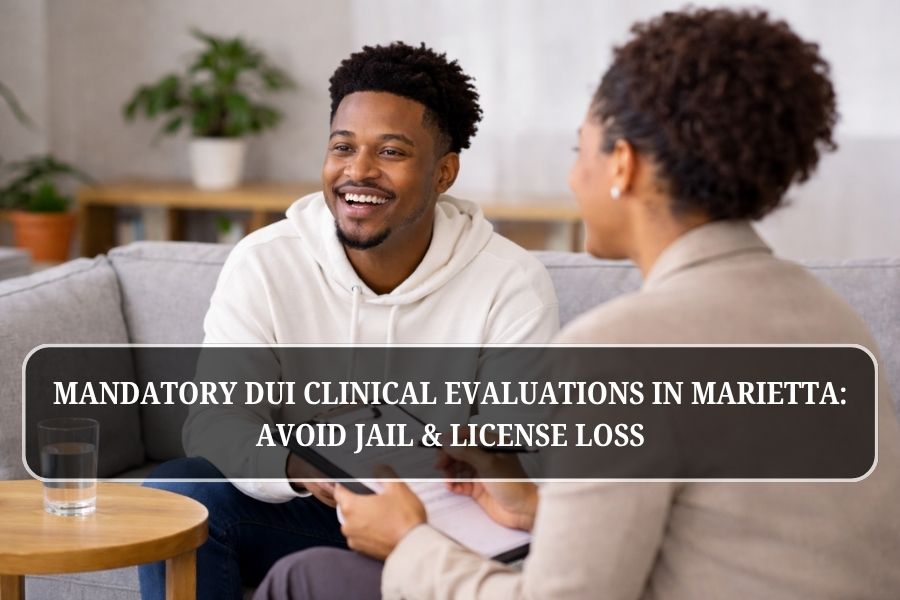
Mandatory DUI Clinical Evaluations in Marietta: Avoid Jail & License Loss

A DUI charge in Marietta, Georgia, carries serious consequences jail time, license suspension, heavy fines, and a permanent mark on your record. But completing a mandatory DUI Clinical Evaluation on time can protect you from the worst outcomes and demonstrate accountability to the court. At AACS Atlanta our certified clinicians provide same-day DUI Evaluation in Marietta and across all of Georgia, helping you move forward quickly, legally, and confidently.

What Is a DUI Clinical Evaluation and Why Is It Mandatory?

A DUI Clinical Evaluation (also called a DUI Substance Abuse Assessment or Alcohol and drug uniform report) is a comprehensive, court-mandated assessment ordered by a sentencing judge as part of DUI probationary conditions. It evaluates whether the individual has an addictive disease, substance use disorder, or co-occurring mental health condition linked to impaired driving behavior.

Georgia courts require a DUI Clinical Evaluation for any DUI (Driving Under the Influence), DWI, or drug-related DUI charge. Completing it proactively even before your court date shows the judge you take responsibility, and courts view this favorably.

Skipping or delaying it puts you at serious risk of:

  • Extended jail or probation sentences
  • Permanent or extended driver’s license suspension
  • Additional fines and court costs
  • Inability to reinstate driving privileges with the DDS/DMV
  • Repeat DUI classification if you accrue multiple charges

Act now: completing your DUI Clinical Evaluation early is one of the most powerful steps you can take to protect your freedom and your license.

DUI Clinical Evaluation vs. Alcohol & Drug Evaluation: Know the Difference

Many people in Marietta make a costly mistake they complete a standard Alcohol & Drug Evaluation when their DUI charge actually requires a DUI Evaluation. Here is why this matters:

Your probation officer may accept an Alcohol & Drug Evaluation, but the Georgia Department of Driver Services (DDS) and the Department of Motor Vehicles (DMV) require a DUI Clinical Evaluation specifically to reinstate your suspended license. These are two entirely separate requirements. If you complete the wrong evaluation first, you will pay twice.

AACS Atlanta always asks about your specific charge before recommending an evaluation type. Our experienced team ensures you complete the right assessment the first time saving you time, money, and legal complications.

What the DUI Evaluation Process Covers

At AACS Atlanta, your DUI Evaluation is a thorough one-on-one clinical interview conducted by a licensed, certified professional.

The session typically lasts 45–90 minutes and covers:

  • Current and past alcohol and drug use history
  • All prior DUI arrests, convictions, and legal records
  • Mental health background and co-occurring conditions
  • Employment, family, and social history
  • Risk assessment for future high-risk behavior
  • Standardized psychometric testing for accurate diagnosis

After the evaluation, your clinician discusses the findings with you and prepares a personalized written report accepted by Georgia courts, probation officers, the DDS, and the DMV. This report includes a diagnosis and counseling recommendations tailored to your specific situation.

Online vs. In-Person DUI Clinical Evaluation in Marietta: Which Should You Choose?

AACS Atlanta offers both online and in-person DUI clinical evaluations in Georgia. Here is how to decide which format works best for your situation:

Online DUI Clinical Evaluation

  • Complete your evaluation securely from home, work, or anywhere in Georgia.
  • Same-day appointments available meet urgent court deadlines instantly.
  • Ideal for residents across Georgia who cannot travel to Marietta.
  • Secure video platform with a certified DUI evaluator.
  • Produces the same court-accepted, DDS/DMV-compliant written report.
  • Best for: clients facing tight court deadlines or located outside Marietta.

In-Person DUI Clinical Evaluation in Marietta

  • Conducted at 1295 Terrell Mill Road, Suite 104, Marietta, GA 30067.
  • Face-to-face clinical session with a licensed, certified evaluator.
  • On-site completion of paperwork and same-day written report.
  • Preferred for complex cases with multiple DUI arrests or extensive history.
  • Bilingual service available in English and Spanish.
  • Best for: clients who want direct interaction or have multi-document cases.

Both formats produce identical, court-accepted DUI Clinical Evaluation reports. The best option is the one you complete fastest. AACS Atlanta makes both effortless.

Why Marietta Residents Trust AACS Atlanta for DUI Evaluations

When your freedom, your license, and your future are on the line, you need a certified evaluation provider you can trust completely.

Here is why AACS Atlanta stands above every other option in Marietta and Georgia:

  • 25+ years of experience: Over two decades serving Marietta and Georgia communities with expert DUI evaluations and counseling.
  • Same-day results: AACS Atlanta provides same-day DUI Clinical Evaluation reports when all documentation is complete, which is critical for urgent court deadlines.
  • Certified & licensed professionals: Our team includes licensed psychologists, psychiatrists, social workers, and CADC-certified substance abuse counselors.
  • Court-approved reports: Every evaluation report meets Georgia court, probation, DDS, and DMV standards.
  • Correct Evaluation, first time: We always identify the right evaluation type for your charge, no costly repeat evaluations.
  • All follow-up services under one roof: Need DUI School (Risk Reduction Program), ASAM Level I, II.1, or II.5 classes, or an Intensive Outpatient Program? AACS Atlanta offers everything.
  • Bilingual Service: We serve clients in English and Spanish (DUI Evaluación).
  • Out-of-State DUI Support: Received a DUI outside Georgia? Our out-of-state DUI assessment fulfills requirements for both Georgia and other jurisdictions.
  • Transparent, Fair Pricing: Our fees reflect the true value of a certified, legally sound evaluation never suspiciously cheap, never overpriced.
  • Compassionate Care: We treat every client with dignity and respect, not as a case number.

Serving Marietta and All of Georgia

AACS Atlanta provides DUI Clinical Evaluations to clients throughout Marietta, Cobb County, Atlanta, Decatur, and every county across Georgia. Our Marietta office at 1295 Terrell Mill Road serves the local community directly, while our online evaluation platform reaches every corner of the state. Whether you live near the courthouse or hours away, AACS Atlanta connects you with a certified DUI evaluator today.

Frequently Asked Questions About DUI Clinical Evaluations in Marietta

Q1: What happens if I skip my mandatory DUI Clinical Evaluation in Georgia?

Skipping your court-ordered DUI Clinical Evaluation puts you at risk of probation violations, extended sentencing, additional fines, and permanent license suspension. Georgia courts treat non-compliance seriously. Complete your evaluation promptly to protect your legal standing.

Q2: How is a DUI Clinical Evaluation different from an Alcohol & Drug Evaluation?

A DUI Clinical Evaluation specifically covers DUI-related substance abuse history and is required by the Georgia DDS/DMV to reinstate a suspended license. A standard Alcohol & Drug Evaluation satisfies probation requirements but does NOT fulfill DDS/DMV requirements. AACS Atlanta ensures you complete the correct evaluation for your specific charge.

Q3: How long does a DUI Clinical Evaluation take at AACS Atlanta?

A standard DUI Clinical Evaluation takes 45–90 minutes. Clients with multiple DUI arrests or more complex histories should expect a longer session. AACS Atlanta provides same-day written reports when your documentation is complete and in order.

Q4: Can I complete my DUI Clinical Evaluation online in Georgia?

Yes. AACS Atlanta offers fully compliant online DUI Clinical Evaluations via secure video platform for clients anywhere in Georgia. The online evaluation produces the same Georgia court-accepted, DDS/DMV-compliant written report as an in-person session.

Q5: Can a proactive DUI Clinical Evaluation help reduce my sentence?

Yes. Completing your DUI Clinical Evaluation before your court date demonstrates accountability and responsibility to the judge. Georgia courts view proactive evaluations favorably and often consider them when determining sentences, probation terms, and treatment requirements.

Q6: Does AACS Atlanta handle Out-of-State DUI Evaluations?

Yes. If you received a DUI in another state but reside in Georgia or received a Georgia DUI while living elsewhere, AACS Atlanta provides comprehensive out-of-state DUI assessments. These evaluations meet the requirements of both Georgia authorities and the referring state’s court or DMV.

Q7: What follow-up services does AACS Atlanta offer after a DUI Clinical Evaluation?

AACS Atlanta offers every service you may need after your evaluation under one roof, including DUI School (Risk Reduction Program), ASAM Level I, 2.1, and 2.5 classes, Intensive Outpatient Program (IOP), individual counseling, and outpatient rehab. Completing your recommended treatment with the same certified provider strengthens your legal case and supports your recovery.

Schedule Your DUI Evaluation in Marietta Today

Do not risk jail time, license loss, or a damaged future by delaying your mandatory DUI Clinical Evaluation. AACS Atlanta makes the process fast, affordable, and stress-free. Call us at 800-683-7745 to book your same-day appointment online or in person in Marietta. Our certified team stands ready to help you protect your rights and move forward.

Court-Ordered Mental Health Assessment Georgia | Fast & Affordable – AACS Counseling

Court-Ordered Mental Health Assessment in Georgia: Fast & Affordable Evaluations by AACS Counseling

When courts require individuals to complete a court-ordered mental health assessment, it can feel overwhelming and confusing. Whether the evaluation is required for a child custody case, divorce proceedings, a criminal matter, a civil dispute, or employment concerns, understanding the process and choosing the right provider is critical.

For individuals in Georgia, AACS Counseling has over 30 years of experience conducting professional court-ordered mental health assessments. Our team provides fast turnaround times, affordable evaluation packages, and court-accepted reports, helping clients meet legal requirements quickly while receiving professional and confidential care.

If you need a mental health assessment ordered by a court, attorney, probation officer, or employer, you can learn more about our services here:

Mental Health Assessment

This guide explains:

  • What a court-ordered mental health assessment is
  • Why courts require mental health evaluations
  • Situations where mental health assessments are needed
  • What happens during the evaluation process

How long does the process take

Why AACS Counseling offers the fastest and most affordable mental health assessments in Georgia

What Is a Court-Ordered Mental Health Assessment?

A court-ordered mental health assessment is a professional evaluation conducted by a licensed mental health professional to determine an individual’s psychological well-being, emotional stability, and behavioral functioning.

Courts often require these assessments when mental health factors may influence legal decisions or the safety of others.

The purpose of the assessment is to provide the court with a professional, objective evaluation that can assist judges, attorneys, and probation officers in making informed decisions.

A court-ordered mental health assessment may examine:

  • Emotional and psychological health
  • Behavioral patterns
  • Stress or trauma history
  • Family and social relationships
  • Risk factors affecting decision-making

The final report helps courts determine whether counseling, treatment programs, or other support services may be beneficial.

At AACS Counseling in Georgia, our licensed professionals provide thorough evaluations accepted by courts across the state.

Why Courts Require Mental Health Assessments

Courts often rely on mental health evaluations to gain a deeper understanding of an individual’s psychological condition.

Judges may require assessments when mental health concerns may impact legal outcomes or personal responsibilities.

Common reasons courts require mental health assessments include:

  • Child custody disputes
  • Divorce proceedings
  • Criminal cases
  • Civil court matters
  • Probation requirements
  • Workplace or employment disputes

These evaluations provide professional insight into behavioral and psychological factors that may affect legal decisions.

Court-Ordered Mental Health Assessments for Child Custody Cases

One of the most common reasons for mental health evaluations is child custody litigation.

Family courts often require psychological evaluations to determine whether parents can provide a safe and stable environment for their children.

A child custody fitness assessment examines factors such as:

  • Emotional stability
  • Parenting ability
  • Stress management
  • Relationship with the child
  • Household stability

If you need a custody-related evaluation, learn more here:

Child Custody Assessment in Georgia | Court-Approved Evaluations

These assessments help courts determine custody arrangements that prioritize the best interests of the child.

Mental Health Assessments for Divorce Proceedings

Divorce cases can sometimes involve allegations related to emotional stability, stress, or behavioral concerns.

In these situations, courts may order a mental health evaluation to assess whether either party may need counseling or support.

Evaluations conducted during divorce cases may explore:

  • Emotional stress related to marital conflict
  • Behavioral patterns affecting family relationships
  • Mental health factors affecting parenting decisions

Professional assessments help courts make fair decisions regarding custody, visitation, and parental responsibilities.

Court-Ordered Mental Health Assessments for Criminal Cases

Mental health evaluations may also be required in criminal proceedings.

Courts may request an assessment to determine whether mental health concerns contributed to the alleged offense or may affect rehabilitation needs.

These assessments may evaluate:

  • Psychological stability
  • Impulse control
  • Behavioral risk factors
  • Substance use history

Mental health evaluations can help courts determine appropriate treatment programs or counseling requirements.

For general mental health information and resources, visit the National Institute of Mental Health:

https://www.nimh.nih.gov

Civil Court Cases That Require Mental Health Evaluations

Mental health assessments may also be required during civil litigation.

Examples include:

  • personal injury cases
  • workplace disputes
  • harassment claims
  • emotional distress claims

Courts may order evaluations to determine the psychological impact of certain events or situations.

These assessments provide professional documentation that may be used during legal proceedings.

Mental Health Assessments for Employment Matters

In some situations, employers or regulatory agencies may require psychological assessments related to workplace incidents.

For example, mental health evaluations may be requested following:

  • workplace conflicts
  • allegations of harassment or misconduct
  • safety concerns involving employees

Professional assessments help organizations understand whether additional support or counseling may be appropriate.

What Happens During a Court-Ordered Mental Health Assessment

Many individuals feel anxious before attending a mental health evaluation. Understanding the process can make the experience much less stressful.

Most court-ordered mental health assessments involve several key steps.

Step 1: Scheduling the Evaluation

The first step is scheduling an appointment with a qualified mental health professional.

At AACS Counseling, we offer fast scheduling and quick appointment availability to help individuals meet court deadlines.

You can begin the process here:

Mental Health Assessment

Step 2: Intake and Background Information

Before the evaluation begins, individuals may complete intake forms covering:

  • personal background
  • legal case details
  • medical and mental health history
  • family relationships

This information helps the clinician understand the context of the evaluation.

Step 3: Clinical Interview

The clinical interview is the primary component of the evaluation.

During this session, the clinician may ask questions about:

  • emotional well-being
  • life stressors
  • family relationships
  • behavioral patterns

The purpose of the interview is to gather accurate information about the individual’s psychological functioning.

Step 4: Psychological Screening Tools

In addition to the interview, clinicians may use standardized psychological screening tools.

  • These tools help assess:
  • depression symptoms
  • anxiety levels
  • behavioral risk factors
  • stress management

Using validated tools ensures the evaluation is objective and evidence-based.

Step 5: Evaluation Report

After completing the assessment, the clinician prepares a formal report.

This report may include:

  • psychological observations
  • behavioral risk analysis
  • professional recommendations

The report may be submitted to the court, attorney, or probation officer, depending on the case requirements.

Fastest Court-Ordered Mental Health Assessment in Georgia

When legal deadlines are involved, timing is extremely important.

Many individuals must submit their evaluation reports before the upcoming court hearings.

AACS Counseling provides some of the fastest mental health assessment turnaround times in Georgia, helping clients meet court deadlines without unnecessary delays.

Our streamlined process ensures:

  • fast appointment scheduling
  • efficient evaluation procedures
  • prompt report preparation

This allows clients to move forward with their legal cases quickly.

Most Affordable Mental Health Assessment in Georgia

Legal expenses can be stressful, especially when multiple court requirements must be completed.

AACS Counseling is known for providing one of the most affordable mental health assessment packages available in Georgia while maintaining professional standards required by courts.

Our goal is to ensure individuals receive professional evaluations without excessive financial burden.

Over 30 Years of Professional Experience

Experience matters when courts rely on evaluation reports.

With more than 30 years of experience, AACS Counseling has helped thousands of individuals complete court-ordered assessments.

Our clinicians understand the legal and psychological aspects of mental health evaluations and work closely with attorneys, probation officers, and courts.

This experience allows us to provide:

  • accurate professional reports
  • thorough psychological evaluations
  • trusted assessments accepted by courts
  • Confidentiality and Privacy

Mental health evaluations involve sensitive personal information.

Professional counselors follow strict privacy standards when conducting evaluations.

Federal privacy laws such as HIPAA help protect personal health information and ensure confidentiality.

You can learn more about privacy protections here:

https://www.hhs.gov/hipaa/index.html

Frequently Asked Questions About Court-Ordered Mental Health Assessments

How long does a mental health assessment take?

Most assessments take between one and two hours, depending on the complexity of the case.

Can the evaluation be completed online?

In many cases, mental health assessments can be conducted through secure telehealth platforms when permitted by the court.

Who receives the evaluation report?

The report may be sent to the court, attorney, or probation officer, depending on the case.

Will the evaluation affect my case outcome?

The evaluator provides professional findings and recommendations, but the final decision is made by the judge.

Preparing for Your Mental Health Assessment

Preparing for the evaluation can make the process smoother.

Individuals should bring:

  • identification
  • court documents
  • relevant medical records

Being honest and open during the evaluation helps ensure accurate results.

Why Choose AACS Counseling

Individuals across Georgia choose AACS Counseling for court-ordered mental health assessments because we provide:

  • over 30 years of experience
  • fast turnaround times
  • affordable evaluation packages
  • professional reports accepted by courts
  • confidential and compassionate care

Our goal is to help clients complete their assessments quickly so they can focus on resolving their legal matters.

Schedule Your Court-Ordered Mental Health Assessment Today

If you have been ordered by a court to complete a mental health assessment, scheduling the evaluation as soon as possible can help ensure compliance with legal deadlines.

AACS Counseling provides fast, affordable, and professional mental health assessments in Georgia.

Learn more or schedule your evaluation here:

Mental Health Assessment

For custody-related assessments, visit:

Child Custody Fitness Assessment

Final Thoughts

Court-ordered mental health assessments play an important role in many legal proceedings, helping courts understand psychological factors that may influence decisions regarding custody, criminal cases, employment matters, or civil disputes.

Choosing an experienced provider can make the process smoother and faster.

With over 30 years of experience, affordable evaluation packages, and quick turnaround times, AACS Counseling is a trusted provider of court-ordered mental health assessments in Georgia.

If you need to complete an assessment ordered by the court, contact AACS Counseling today and take the first step toward resolving your legal matter with confidence.