

CADC Credentials
When the court orders you to complete an alcohol and drug evaluation in Georgia, you are immediately thrust into a world of confusing acronyms and legal requirements. You might see terms like “DBHDD approved,” “clinical evaluator,” or a string of letters behind a counselor’s name and wonder what any of it means.
Here is the most important thing you need to know right now: In Georgia, a clinical evaluation is only legally valid if it is performed by a professional who is actively listed on the Department of Behavioral Health and Developmental Disabilities (DBHDD) Registry. If your evaluator does not hold specific, state-recognized credentials, your evaluation will be rejected by the court, the Department of Driver Services (DDS), and your probation officer.
Choosing the right professional isn’t just about ticking a box; it is about ensuring your paperwork is defensible in court and accepted without question. This guide will help you decode the credentials of a certified addiction counselor Georgia courts recognize so you can make an informed choice.
Why Credentials Matter in Georgia Law
The state of Georgia takes DUI and drug offenses seriously. To ensure public safety, the law requires that anyone assessing an offender must be highly trained in the field of addiction and substance abuse. This is not a task for a general life coach or a standard therapist without specific addiction training.
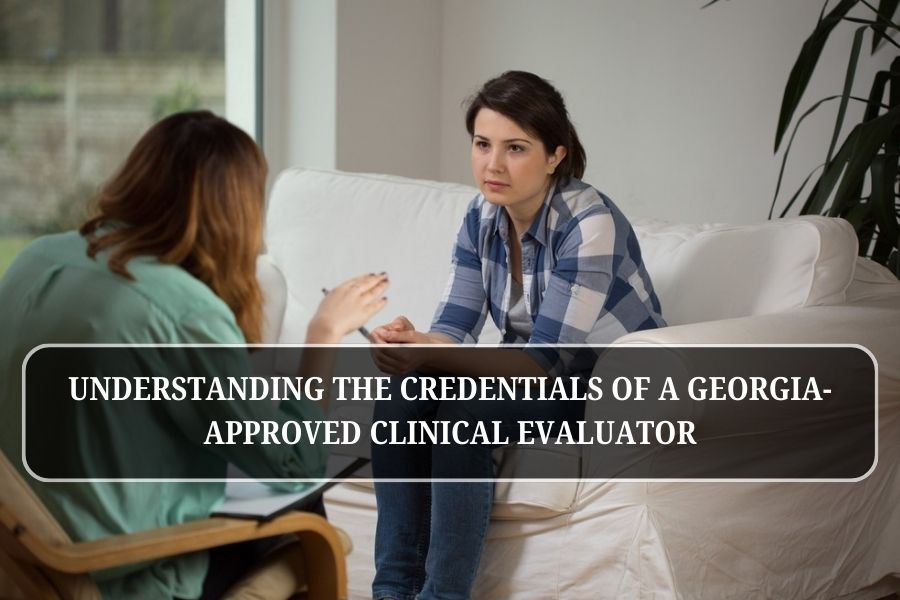
Under Georgia law, a “clinical evaluator” must have specific certifications to be approved by the DBHDD. These certifications ensure that the person sitting across from you—whether in an office or via a telehealth video call—has the education, experience, and ethical training to make a fair and accurate assessment of your situation.
If you submit an evaluation from a provider who lacks these credentials, you will likely face two consequences:
- Rejection: The court or DDS will refuse to accept the document.
- Additional Cost: You will have to pay for a second evaluation with a proper DBHDD-approved clinical evaluator.
Breaking Down the Letters: The Credential Guide
When you look for an evaluator, you will often see letters following their name. These aren’t just random titles; they represent years of study, thousands of hours of supervised clinical experience, and rigorous board exams.
Here is a breakdown of the three most common and respected credentials you should look for when seeking a substance abuse professional whose credentials GA courts accept.
MAC (Master Addiction Counselor)
The MAC credential is widely considered the gold standard in the field of addiction counseling. When you see “MAC” after an evaluator’s name, you are dealing with a highly educated professional.
- Master’s Degree Required: Unlike some lower-tier certifications, a Master Addiction Counselor must hold a master’s degree or higher in a related health field (such as psychology, social work, or counseling).
- Specialized Knowledge: A MAC has demonstrated advanced knowledge in the science of addiction, co-occurring disorders (where mental health issues overlap with substance use), and clinical treatment protocols.
- Highest Tier: In the hierarchy of credentials, a master addiction counselor evaluation carries significant weight because it signifies the highest level of academic and clinical preparation.
CAC (Certified Addiction Counselor)
The Certified Addiction Counselor (CAC) designation is the backbone of the addiction treatment field in Georgia. It is divided into two levels: CAC I and CAC II.
- Experience is key: A CAC isn’t someone who just passed a test. To earn this credential, a counselor must complete thousands of hours of supervised work experience. For a CAC II, this often involves 4,000 hours or more of direct clinical work.
- The Difference Between Levels:
-
- CAC I: An entry-level certification that requires a bachelor’s degree (or equivalent) and significant supervised experience.
- CAC II: An advanced certification requiring a bachelor’s degree and even more extensive clinical supervision and experience. A CAC II can operate more independently and is recognized as a senior clinician.
- Why It Matters: When you work with a CAC, you are working with someone who has seen thousands of cases. They have the practical experience to distinguish between a one-time mistake and a serious dependency issue.
CADC (Certified Alcohol and Drug Counselor)
The CADC credential is internationally recognized and adheres to strict standards set by the International Certification & Reciprocity Consortium (IC&RC).
- Rigorous Testing: Earning a CADC requires passing a comprehensive written examination that covers everything from pharmacology (how drugs affect the brain) to ethical responsibilities.
- Ethical Standards: CADCs are bound by a strict code of ethics. This protects you, the client, ensuring that your evaluation is conducted fairly, confidentially, and without bias.
- Versatility: A CADC is trained to handle a wide variety of substance use issues, making them well-equipped to handle standard DUI evaluations as well as more complex drug possession cases.
How to Verify Your Evaluator’s License
Transparency is the enemy of fraud. Legitimate professionals want you to verify their credentials because they have worked hard to earn them.
You should never just take a website’s word for it. Before you pay a single dollar, you can—and should—verify that your potential evaluator is on the state’s approved list. This is the single best way to protect yourself.
The Verification Process:
- Visit the State Registry: Go to the Georgia DUI Intervention Program website (managed by DBHDD).
- Search for the Provider: You can search by the evaluator’s name or the program name.
- Check the Status: Ensure their status is listed as “Active.”
If a provider makes excuses about why they aren’t on the list or claims their “national certification” supersedes Georgia’s list, hang up the phone. In the context of a Georgia DUI or drug charge, only the DBHDD registry matters.
The Expert Advantage at AACS Atlanta
At AACS Atlanta, we don’t just meet the minimum standards; we aim for the highest level of clinical excellence. We understand that an evaluation is a legal document that can determine your future—whether you keep your license, avoid jail time, or clear your name.
That is why we exclusively employ evaluators with verified, top-tier credentials. When you book a session with us, you are likely meeting with a professional holding a MAC, CAC II, or comparable licensure (such as an LPC or LCSW with addiction expertise).
Why this benefits you:
- Court Defensibility: If a prosecutor or judge questions the findings of your evaluation, having a MAC or CAC II sign the report provides an unshakeable layer of credibility.
- Accuracy: High-level credentials mean our team knows how to interpret the standardized tests (like the SALCE or NEEDS) accurately. We ensure you aren’t unfairly categorized based on a misunderstanding of your history.
- DDS Acceptance: The Georgia Department of Driver Services is strict. Our evaluators know exactly how to format reports to ensure they fly through the DDS processing system without rejection.
Warning: Avoiding “Certificate Mills”
The internet is full of websites promising “Instant Evaluations” or “15-Minute Assessments.” These are often what the industry calls “certificate mills.”
These sites typically:
- Use automated quizzes instead of real clinical interviews.
- Are operated by companies outside of Georgia with no knowledge of local laws.
- Issue generic PDF certificates that have zero legal standing in a Georgia court.
If you submit one of these fake certificates, the judge will reject it, and you will be back at square one—minus the money you wasted. Genuine DBHDD-approved clinical evaluator assessments take time (usually 60-90 minutes) because they are thorough, medical-grade appointments.
Trust Our Certified Experts
Navigating the legal system is stressful enough without worrying if your evaluator is qualified. Don’t leave your driver’s license reinstatement or your court case to chance.
At AACS Atlanta, we pride ourselves on transparency, professionalism, and clinical expertise. We are here to help you satisfy your court requirements efficiently and correctly the first time.
Trust our certified experts for your court-mandated evaluation. Contact us to speak with a MAC or CAC-level professional today.