

Before diving into the history of marijuana, if you are facing a drug charge and require an Alcohol and Drug Evaluation (Georgia) (Atlanta, Marietta, or Decatur), you can contact AACS counseling for more info. Their contact information will be at the end of this article.
History of Marijuana in the United States:
The United States’ relationship with marijuana dates back to the Colonial Era, according to the University of Georgia’s school of law. Hemp production (the cannabis plant) was encouraged by the government in the 1600s for the production of rope, sails, and clothing. It wasn’t until after the Civil War that imports replaced hemp. In the late 1900s, marijuana became a popular ingredient in many medicinal products and was sold openly in pharmacies.
After the Mexican Revolution of 1910, Mexican immigrants flooded into the United States, bringing with them the recreational use of marijuana. The drug became associated with the immigrants and the fear that came with that idea spurred an anti-drug campaign. By 1931, 29 states had outlawed marijuana.
In 1937, Congress passed the Marijuana Tax Act, which criminalized marijuana. In the 1950s, federal laws which set mandatory sentences for drug-related offenses were enacted. In the 1960s attitudes towards marijuana became more lenient as reports came out that marijuana did not induce violence or lead to the use of heavier drugs. By 1970, Congress repealed most of the mandatory penalties for drug-related offenses.
In 1972, the bipartisan Shafer Commission determined that personal use of marijuana should be decriminalized. Nixon rejected the recommendation, but throughout the 1970s, eleven states decriminalized marijuana and most others reduced their penalties.
However, the 1980s War on Drugs reversed all of that and mandatory sentences were re-enacted by President Reagan. The “three strikes you’re out” policy, required life sentences for repeat drug offenders. Afterwards, another major shift happened in 1996. California passed Proposition 215 allowing for the sale and medical use of marijuana for patients with AIDS, cancer, and other serious painful diseases.
States that have decriminalized marijuana:
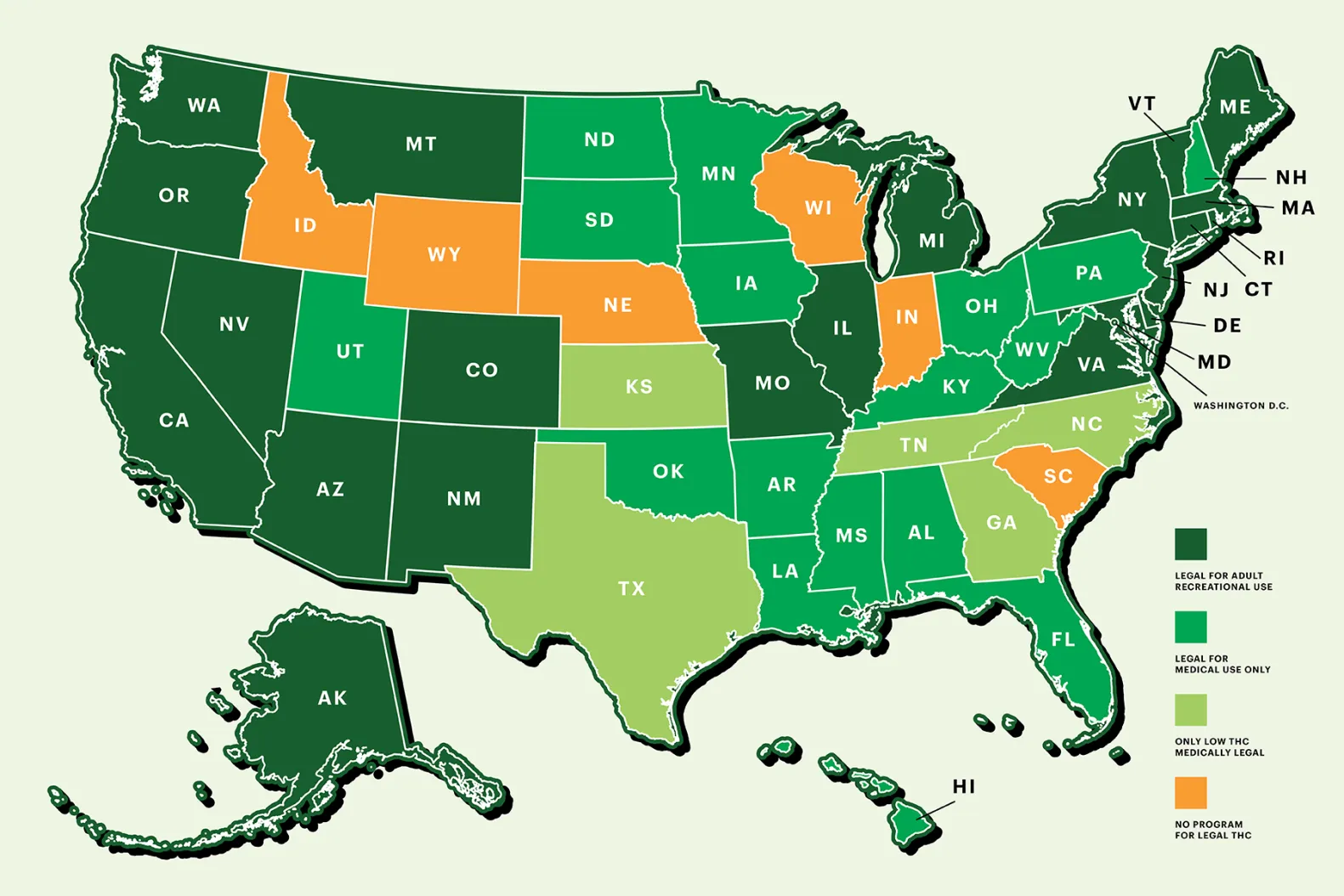
States that have decriminalized marijuana include Alaska (also now with legal provisions), California, Colorado (also now with legal provisions), Connecticut, Delaware, Illinois, Maine, Maryland, Massachusetts, Minnesota, Mississippi, Missouri, Nebraska, Nevada, New Hampshire, New York, North Carolina, Ohio, Oregon (also now with legal provisions), Rhode Island, Vermont and Washington (also now with legal provisions), and the District of Columbia (also now with legal provisions).
- In some instances, certain cities of a state have also begun to decriminalize marijuana up to a certain amount. Even when it’s still illegal in the state (i.e, Atlanta, Savannah, etc.)
Types of Marijuana charges and their penalties:

What happens if you are facing a marijuana charge:
One of the first things the court will mandate is to take a Substance Abuse Evaluation. You can search for Alcohol and Drug evaluation for providers in your area. Make sure the providers are certified and licensed to complete your assessment. AACS counseling is often a popular choice. This is because they offer a virtual substance abuse assessment, as well as an in-person assessment. If you need your evaluation done quickly, they are the place for you. Within two business days is the standard with them, although they usually finish sooner. If you need your evaluation finalized the same day, you can also pay a rush fee to get it within the next hour or two.
“If you’re facing a legal issue or need a professional evaluation, AACS Counseling is here to help. Call us today at 800.683.7745 or visit our website to schedule your appointment.”
Sources cited
https://libguides.law.uga.edu/c.php?g=522835&p=3575350

9 thoughts on “Why is Marijuana Illegal?”
Comments are closed.