
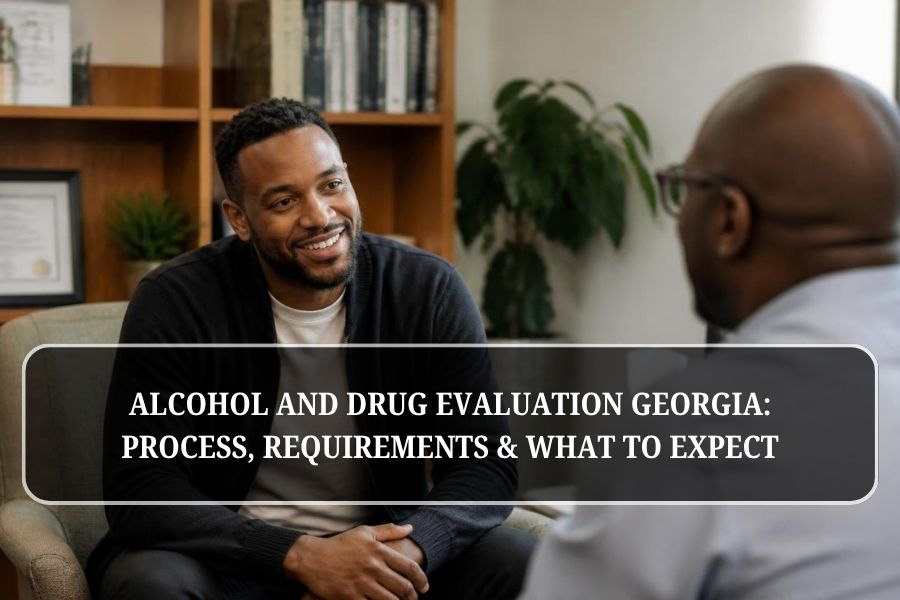
An alcohol and drug evaluation in Georgia may be required for much more than a DUI. A drug possession charge, domestic violence case, DFCS referral, probation requirement, or employment-related concern can all lead to a request for an evaluation.
If you’ve never completed one before, the process can feel confusing. What does the evaluator ask? How long does it take? What information should you bring? And what happens after the evaluation?
This guide explains how an alcohol and drug evaluation works in Georgia, who may need one, what to expect during the appointment, and how the completed report may be used.
What Is an Alcohol and Drug Evaluation?
An alcohol and drug evaluation is a professional assessment of an individual’s history of alcohol and other substance use. The evaluation looks at patterns of substance use and considers how they may affect a person’s legal, family, employment, and personal circumstances.
The evaluator reviews the information provided during the assessment and determines whether additional education, counseling, or treatment may be appropriate.
An evaluation may be required or recommended in connection with situations such as:
- Possession of a controlled substance
- Possession with intent to distribute
- Public intoxication
- Disorderly conduct
- Reckless driving
- Underage alcohol possession
- Drug paraphernalia charges
- Vandalism or trespassing
- Assault or battery
- Domestic violence cases
- DFCS referrals involving parental fitness
The exact requirements depend on the circumstances of the case and the instructions provided by the court, probation officer, attorney, employer, or other referring organization.
Who May Need an Alcohol and Drug Evaluation?
There are several situations in which an alcohol and drug evaluation may be requested. You may need one if:
- A Georgia judge orders an evaluation as part of your case
- Your probation officer requires an evaluation
- You are participating in a pre-trial diversion program
- An employer requires a substance use evaluation
- DFCS refers you for an assessment related to parental fitness
- Your attorney recommends an evaluation as part of your legal strategy
- You want to complete an evaluation proactively before it becomes a formal requirement
If you have been instructed to obtain an evaluation, make sure you understand exactly what type of assessment and documentation is required before scheduling your appointment.
What Happens During an Alcohol and Drug Evaluation?
An alcohol and drug evaluation is typically conducted as a confidential outpatient assessment with a qualified professional. Depending on your location and circumstances, the evaluation may be completed in person or through secure telehealth.
During the evaluation, the provider may discuss several areas of your history and current circumstances.
Medical History
You may be asked about your general medical history, significant illnesses, current medications, and other health information relevant to the assessment.
Psychiatric History
The evaluator may discuss previous mental health treatment, psychiatric diagnoses, medications, and other relevant information.
Social History
Questions may cover your relationships, employment, education, living situation, and other aspects of your social background.
Legal History
The evaluator may review your history of arrests, charges, convictions, probation, and other legal matters. Providing accurate and complete information is important because inconsistencies between your statements and available records can create complications with the evaluation.
Substance Use History
You may be asked about current and previous use of alcohol, marijuana, cocaine, methamphetamine, heroin, prescription medications, and other substances.
The evaluator may also ask about the frequency, amount, duration, and circumstances of substance use.
Family and Interpersonal History
Questions about family relationships, interpersonal relationships, and other personal factors may also be part of the evaluation.
After reviewing the information, the evaluator prepares a written report documenting the findings and, when appropriate, recommendations for education, counseling, or treatment.
The Alcohol and Drug Evaluation Process: Step by Step
Understanding the process beforehand can make the appointment easier to navigate.
Initial Contact
Call AACS Atlanta or book your evaluation online. Provide your name, date of birth, phone number, and email address.
Schedule
Choose an in-person or virtual appointment that works for you. Same-day and next-day appointments may be available.
The Evaluation
Complete a confidential 45–60 minute session with a qualified professional who will review your relevant substance use, medical, legal, social, and personal history.
Written Report
You receive a detailed clinical report documenting the evaluation findings and any recommendations, formatted for applicable Georgia court and probation requirements.
Next Steps
If education, counseling, or treatment is recommended, AACS Atlanta can explain the next steps and provide available services in-house, so you don’t have to find another provider.
How Can the Evaluation Report Help?
An alcohol and drug evaluation provides documentation of your assessment and may be submitted to the appropriate party based on the requirements of your case.
Completing an evaluation and following through with its recommendations can demonstrate that you are taking the matter seriously.
Depending on your circumstances, the evaluation may be relevant to:
- Court or probation requirements
- Pre-trial diversion programs
- Treatment or education requirements
- Employment-related requirements
- DFCS-related proceedings
However, an evaluation does not guarantee a specific legal outcome, reduced sentence, or other result. Any potential impact on your case depends on the facts of your situation and the decisions of the court or other involved authorities.
What Should You Bring to Your Evaluation?
Being prepared can help the evaluation proceed smoothly. Consider bringing:
- A valid photo ID
- Court orders or other relevant legal documents
- Probation paperwork, if applicable
- Information about previous treatment or counseling
- Relevant medical or psychiatric records, if available
- Any paperwork provided by your attorney, employer, DFCS, or referring agency
Most importantly, provide accurate and complete information during the evaluation. If you are unsure about a particular date or detail, it is better to say so than to provide information you know may be inaccurate.
What Happens After the Evaluation?
Once the evaluation is completed, the provider reviews the information and prepares the clinical report.
Depending on the findings, the report may indicate that no additional services are needed or may recommend alcohol or drug education, counseling, or treatment.
If additional services are recommended, make sure you understand:
- What services you need to complete
- How long the program may take
- Whether completion documentation is required
- Who needs to receive proof of completion
- Whether there are specific court or probation deadlines
Following the recommended steps and keeping documentation of your completion can help you stay organized throughout the process.
Why Choose AACS Atlanta for an Alcohol and Drug Evaluation?
AACS Atlanta provides alcohol and drug evaluation services for individuals throughout Georgia.
Our services include:
- Licensed professionals familiar with Georgia requirements
- Same-day appointments, Monday through Friday from 9 AM to 6 PM and Saturday from 9 AM to 5 PM
- In-person evaluations in Marietta
- Secure virtual telehealth services throughout Georgia
- Services available in English and Spanish
- Reports prepared for applicable court, probation, and DDS requirements
- In-house treatment and educational services when recommended
- More than 25 years of experience serving Metro Atlanta and communities throughout Georgia
Evaluations start at $165.
Call 800-683-7745 or book online to schedule a same-day or next-day alcohol and drug evaluation. Bilingual services are available in English and Spanish.