

If you or someone you love has been ordered to complete an alcohol and drug evaluation in Georgia, one of the first questions that comes to mind is, “What exactly will they ask me?” Understanding what to expect during the evaluation process can ease anxiety and help you prepare for an honest, productive session. At AACS Atlanta, we have been guiding Georgia residents through this process for over 25 years, and we want to make sure you feel informed and ready every step of the way.
What Is an Alcohol and Drug Evaluation?
An alcohol and drug evaluation is a structured clinical assessment conducted by a licensed counselor or clinician. It is designed to determine the nature and severity of a person’s relationship with alcohol or drugs.
In Georgia, this evaluation is commonly required in situations such as:
- A DUI or DWI charge
- Court-ordered assessments as part of a criminal case
- Probation requirements
- Employment-related referrals (including DOT/SAP evaluations)
- DFCS or child custody proceedings
- Personal or voluntary assessments
The goal of the evaluation is not to judge you. It is to gather an accurate clinical picture so that the evaluator can recommend the appropriate level of care or confirm that no treatment is needed. The results of your alcohol and drug evaluation directly influence the recommendations made to the court or referring agency, which is why honesty is always the best approach.
Who Conducts the Evaluation?
In Georgia, alcohol and drug evaluations must be conducted by a licensed clinician, typically a Licensed Professional Counselor (LPC), a Licensed Clinical Social Worker (LCSW), or a Certified Alcohol and Drug Counselor (CADC). At AACS Atlanta, our evaluations are carried out by experienced, credentialed professionals who understand both the clinical and legal aspects of the process in Georgia.
Questions Asked During an Alcohol and Drug Evaluation
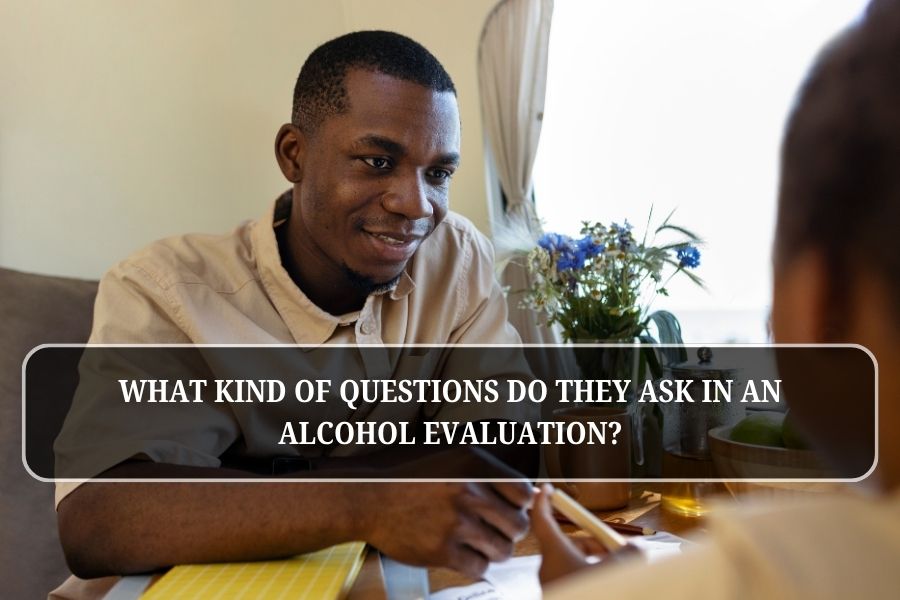
The questions asked during an alcohol and drug evaluation fall into several key categories. Here is a detailed breakdown of what you can expect:
1. Personal and Background Information
The evaluator will begin by collecting general background information, including:
- Your full name, date of birth, and contact details
- Current living situation and household composition
- Employment status and history
- Level of education completed
- Family history, including any history of substance use in your immediate family
This section helps the evaluator understand the broader context of your life circumstances. Family history, in particular, is a clinically relevant factor because research consistently shows that a family history of addiction increases risk.
2. Questions About the Incident or Referral
If your evaluation is court-ordered, for example, following a DUI arrest in Georgia, the evaluator will ask specific questions about the incident that led to the referral:
- What happened on the night of the arrest?
- What substances were involved?
- What was your blood alcohol content (BAC) at the time?
- Have you had prior DUI charges or similar incidents?
- What were the circumstances leading up to the event?
This section is not designed to re-prosecute you. The evaluator is trying to understand whether the incident was isolated or part of a larger pattern of behavior.
3. Alcohol and Drug Use History
This is the most detailed section of the alcohol and drug evaluation Georgia. The evaluator will ask thorough questions about your history with alcohol and other substances:
- How old were you when you first used alcohol or drugs?
- How often do you currently drink or use substances?
- How much do you typically consume in one sitting?
- Have you ever tried to quit or cut back? If so, what happened?
- Do you experience cravings or feel a compulsive need to use?
- Have you ever experienced blackouts, withdrawal symptoms, or tremors?
- Do you use alcohol or substances to cope with stress, anxiety, or emotional pain?
- Have you ever mixed alcohol with prescription medications?
These questions follow evidence-based screening tools such as the AUDIT (Alcohol Use Disorders Identification Test) or the CAGE questionnaire, which are standardized instruments used to assess the severity of alcohol use.
4. Physical and Mental Health Questions
Substance use does not occur in isolation; it is often tied to physical health conditions and mental health challenges. The evaluator will ask:
- Do you have any current medical diagnoses or chronic health conditions?
- Are you currently taking any prescription medications?
- Have you ever received treatment for a mental health condition such as depression, anxiety, PTSD, or bipolar disorder?
- Have you ever been hospitalized due to your alcohol or drug use?
- Have you ever experienced thoughts of self-harm or suicide?
This section helps identify co-occurring disorders, which are common among individuals struggling with substance use. Addressing both issues together leads to significantly better long-term outcomes.
5. Social and Relationship Impact Questions
The evaluator will also explore how alcohol or drug use has affected your relationships and social life:
- Has your substance use caused problems in your marriage or relationships?
- Have family members expressed concern about your drinking or drug use?
- Have you lost friendships or become isolated due to your use?
- Do you socialize primarily in environments where drinking is central?
Social consequences are a key diagnostic indicator. The more areas of a person’s life that have been disrupted by substance use, the more likely a clinical diagnosis and treatment recommendation will follow.
6. Legal and Occupational History
Because many Georgia residents seeking an alcohol and drug evaluation are doing so due to a legal requirement, the evaluator will ask about your legal and work history as well:
- Have you had prior arrests or convictions related to alcohol or drugs?
- Have you ever been fired or disciplined at work due to substance use?
- Have you ever driven while under the influence on multiple occasions?
- Are you currently on probation or parole?
This information helps the evaluator assess risk level and compliance history, both of which factor into the final recommendation.
What Happens After the Evaluation?
Once the alcohol and drug evaluation is complete, the clinician will score the results and prepare a written report. Depending on the findings, the recommendation will fall into one of several categories:
- No treatment needed if the incident was isolated and there is no pattern of problematic use
- Educational program: such as a DUI Risk Reduction Program or substance abuse awareness class
- Outpatient treatment: including ASAM Level I or Level II.1 programs
- Intensive Outpatient Program (IOP): for more significant patterns of use
- Residential or inpatient treatment: for the most severe cases
At AACS Atlanta, we not only conduct the evaluation but also offer the full continuum of recommended follow-up services, including DUI classes, ASAM classes, intensive outpatient programs, and outpatient counseling, all available in English and Spanish across our Georgia locations.
Tips for Preparing for Your Alcohol and Drug Evaluation in Georgia
- Be honest: Clinicians are trained to identify inconsistencies. Providing accurate information leads to an appropriate recommendation and a more favorable outcome overall.
- Bring relevant documents: If you have court paperwork, a police report, or prior treatment records, bring them to your appointment.
- Arrive sober: Arriving under the influence of alcohol or drugs will negatively impact the evaluation and could result in a more severe recommendation.
- Ask questions: You have every right to understand the process. Do not hesitate to ask the evaluator to clarify anything.
Schedule Your Alcohol and Drug Evaluation in Georgia Today
If you have been ordered to complete an alcohol and drug evaluation in Georgia, or if you are seeking one voluntarily, AACS Atlanta is here to help. Our experienced team of licensed counselors and clinicians provides compassionate, same-day appointment services across Georgia. We understand how stressful this process can be, and we are committed to making it as smooth and supportive as possible.
Call us today at 800-683-7745 or visit aacsatlanta.com to schedule your evaluation. We offer appointments at our Marietta and Decatur locations, and same-day appointments are available.
AACS Atlanta has been serving Georgia residents with alcohol and drug evaluation, DUI evaluations, and outpatient counseling services for over 25 years.